Seed Starting
The Awakening
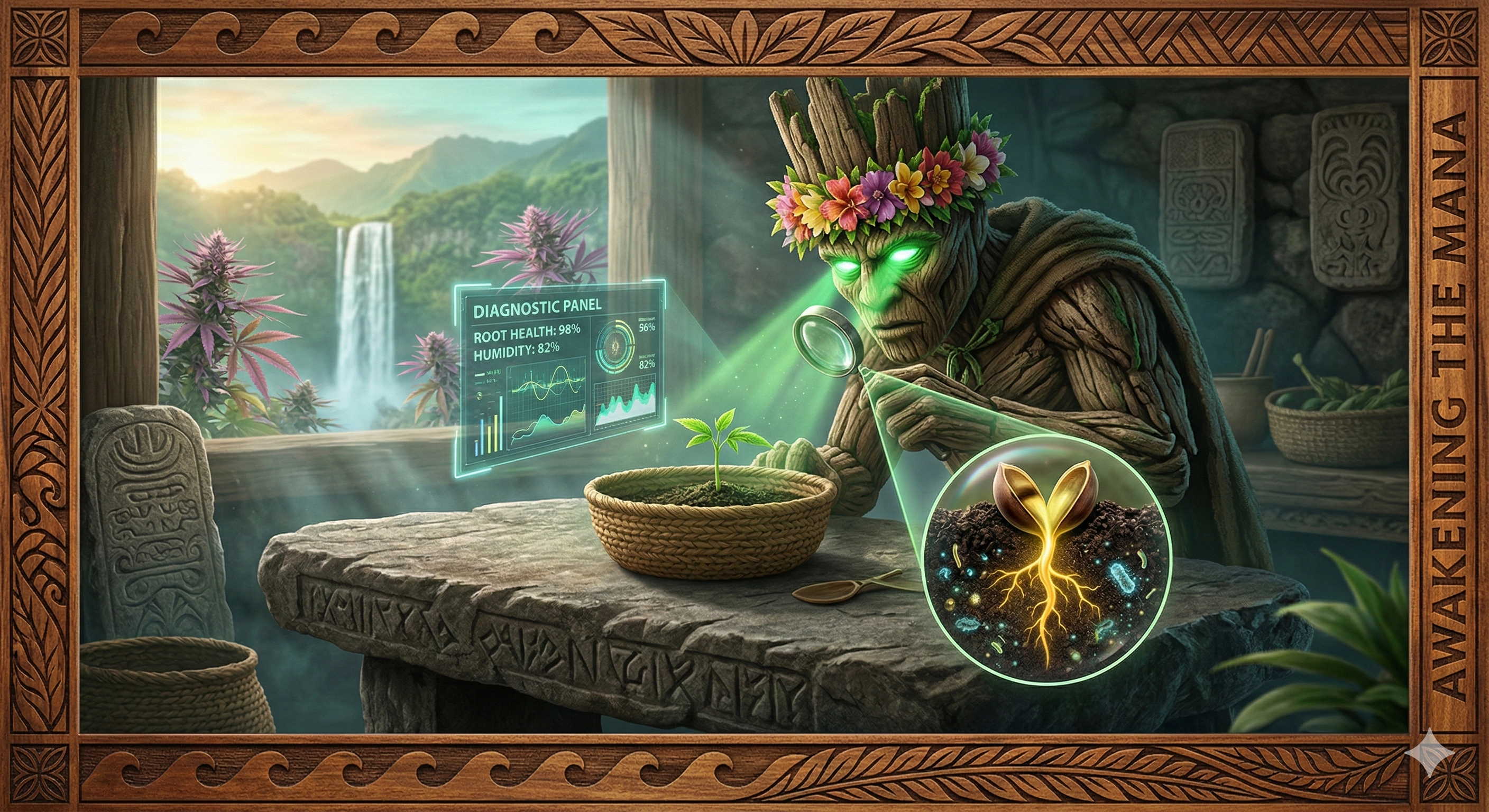
The first 14 days of a seedling's life are the most fragile — and the most sacred. This is the Awakening: the moment the genetic potential of the Tropical Roots Maui library first meets the breath of life. Kānehiwa walks you through the germination ritual (paper towel and direct sow), humidity dome protocols, damping-off defense, blue-spectrum lighting, and the transplant into living soil.
"Choose a spirit that matches your garden. If you seek the energy of the midday sun, look to Hawaii '78. If you seek the calm of the purple sunset, perhaps a Purple Lemonade. Know your seed's name, for it is the first breath of its life."
Choosing Your Seed — Kānehiwa| Seed Type | Flowering Trigger | Speed | Beginner Friendly? |
|---|---|---|---|
| 🌿 Photoperiod | Light schedule (12/12) | Moderate — you control veg length | ✓ Very forgiving |
| ⚡ Autoflower | Internal clock (age-based) | Fast — flowers regardless of light | Less forgiving of mistakes |
| ♀ Feminized | Depends on type (photo or auto) | Varies | ✓ Essential for first run |
| Symptom | What It Means | Kānehiwa's Fix |
|---|---|---|
| 🟡 Yellow Leaves | Too much water — the roots are suffocating and can't absorb oxygen. | "Let the earth breathe. The roots are drowning." |
| 📏 Stretching Stem | Not enough light — the seedling is reaching upward searching for its energy source. | "The plant is searching for the sun. Bring it closer." |
| 💜 Purple Stems | Early stress signal — often cold temperatures, though sometimes just genetics. | "Keep the nursery warm, like a sun-drenched stone." |
-
1Germination — Waking the Spirit
The seed is a sleeping giant. To wake it, you need warmth and moisture — mimicking the damp earth after a tropical rain. Soak two paper towels in filtered water until saturated but not dripping. Place your seeds between the towels, spaced apart. Sandwich the towels between two ceramic plates to create a dark, humid dome, and place them in a warm spot — around 75–80°F (24–27°C).
🌱 The Sign of Life Within 1–4 days, a white taproot will emerge. This is the plant's piko — its connection to life. Once it reaches about 1 cm, it's ready for soil.Check your towels every 12 hours to make sure they haven't dried out. Remoisten with a spray bottle if needed — never let the seed dry back out once germination has started.🌺 Hawaiʻi Island Tip — Germination in the Tropics Hawaiʻi's ambient warmth makes germination almost effortless — most rooms sit right in the 75–80°F sweet spot without any heat mats. However, the high humidity can be a double-edged sword: paper towels may stay too wet, creating a breeding ground for mold on the seed casing. Check your plates every 12 hours and make sure towels are damp, not pooling. If you notice any fuzzy white growth on the seed, gently rinse it with diluted hydrogen peroxide (3%, a few drops in water) and replace the towels. KNF growers: a few drops of LabS in your soak water suppresses mold spores and gives the seed a probiotic head start.Alternative: The Direct Soil Method- The most natural approach — plant the seed 0.5 inches deep in a light, unfertilized seedling mix. No transplant shock, no handling the fragile taproot
- Requires precise moisture management: the soil must stay consistently damp (not wet) until the seed breaks the surface, which can take 3–7 days
- Cover the pot with a humidity dome or clear plastic wrap to maintain moisture, and mist daily with a spray bottle
- On Maui, direct sow works especially well because our ambient humidity keeps the soil surface from drying out too quickly between checks
-
2The Nursery — The First Home
Once the taproot is visible, it needs a home. Use a small container — a red Solo cup with drainage holes punched in the bottom works perfectly. Fill it with a light seedling mix or living soil. Avoid heavy fertilizers early on; they are too "hot" for a baby plant and will burn the delicate roots.
Poke a small hole about 1 cm deep. Place the seed taproot down. Cover lightly with soil — do not pack it down. The seedling needs to be able to push through.
🌫️ The Humidity Dome — Creating the "Island Mist"- Seedlings don't have a developed root system yet — they must absorb moisture from the air through their leaves
- Keep your seedlings under a clear humidity dome (or inverted clear cup) to maintain 70–80% RH — mimicking the heavy, misty air of a Maui rainforest morning
- Lift the dome twice daily to exchange stale air for fresh air — this prevents the stagnant conditions that lead to fungal growth and damping off
- Once the first true leaves (not cotyledons) are fully developed and the plant is standing strong, remove the dome gradually over 2–3 days to harden off
🌺 Hawaiʻi Island Tip — Soil for Island Seedlings Avoid using raw red volcanic cinder straight from the yard — it drains too fast, holds almost no nutrients, and its pH can be unpredictable. For solo cups, stick with a bagged seedling mix or light coco-perlite blend. If you want to go local, mix in a small amount of well-aged compost from a Maui or Big Island worm farm to give the baby plant a gentle, organic start without the burn risk of hot amended soil. Once they're ready for their final pot, transplant into DIY Organic Living Soil inoculated with IMO for the full KNF experience. -
3Seedling Care — The Early Days
The first two weeks are when your plant is most vulnerable. Pay close attention to three things: light, water, and air. Get these right, and your seedling will reward you with strong, healthy growth.
Light — The Soft Sunrise- Give seedlings 18–24 hours of light per day
- Use a soft blue-spectrum light (CFL, T5 fluorescent, or dimmed LED at 5000–6500K) — blue light promotes compact, sturdy growth
- If the stem stretches tall and skinny ("leggy") past 2 inches before its first true leaves, the light is too far away — move it closer or increase intensity slightly
- Target 100–200 PPFD — seedlings are light-sensitive, and too much intensity will "bleach" the cotyledons white. See the DLI Guide for stage-by-stage targets
Watering- Use a spray bottle — the soil should be damp, not a swamp
- Overwatering is the #1 killer for first-time growers
- When in doubt, wait another day before watering
Airflow- A very light breeze from a clip fan (not pointed directly at the seedling)
- Strengthens the stalk — like trade winds strengthen the palm trees
- Prevents dampening-off disease from stagnant, humid air
⚠️ Most Common Mistake Overwatering. The soil should dry slightly between waterings. Stick your finger in — if the top half inch is dry, it's time. If it's still moist, leave it alone.🌺 Hawaiʻi Island Tip — Damping-Off & Fungus Gnats Hawaiʻi's natural humidity (60–70%+) is actually perfect for seedlings — they love moist air. But this also means damping-off disease (a fungal infection that kills seedlings at the soil line) is a real and constant threat on the islands. Make sure your solo cups have good drainage, your fan is providing a gentle breeze, and you're not misting excessively on top of the already-humid air. A small dehumidifier or even a bag of DampRid nearby can keep the microclimate safe.
The Alchemical Secret: A light dusting of ground cinnamon on the soil surface acts as a natural antifungal protector — cinnamon contains cinnamaldehyde, which suppresses the Pythium and Fusarium fungi that cause damping off. Combine this with a very diluted LabS spray (1:1000) on the soil surface once a week — the beneficial lactic acid bacteria outcompete the pathogenic fungi and keep the Microbial Fortress secure from the very start.
Watch for fungus gnats — they thrive in Hawaiʻi's warm, moist conditions and love seedling soil. A thin layer of perlite on the soil surface helps deter them. -
4Transplanting — Moving to the Great Garden
When the leaves grow past the edges of the cup and you see roots poking through the drainage holes, it's time to move to a 3–5 gallon pot. This is a critical moment — handle the roots with care.
Step-by-Step Transplant- Preparation: Fill your large pot with high-quality living soil. Dig a hole the exact size of your starter cup
- The Flip: Place your hand over the top of the cup, stem between your fingers. Turn it upside down and gently squeeze. The root ball should slide out whole
- The Settling: Place the root ball in the new hole. You can bury it slightly deeper if the stem was too tall
- The Blessing: Water it in lightly to settle the roots into their new home
🌺 Hawaiʻi Island Tip — Transplanting in the Tropics Transplant in the cool of early morning or after sunset — not during the midday island heat. Transplant shock is amplified when roots are exposed to high temperatures and intense UV. If growing outdoors, morning sun with afternoon shade is ideal for young transplants in Hawaiʻi; once established (5–7 days), it can handle full sun. If using fabric pots outdoors, Hawaiʻi's trade winds wick moisture from the sides fast — water more frequently, or wrap the pot with light-colored cloth to reduce evaporation. Give transplants a KNF welcome drink: FPJ at 1:1000 + LabS at 1:1000 as a gentle soil drench to encourage root expansion and colonize the new soil with beneficial biology. Follow the full program in the KNF Feeding Schedule.
- Choose feminized seeds for your first grow — you want flowers, not pollen
- Germination temp: 75–80°F (24–27°C) in a dark, humid environment
- Taproot appears in 1–4 days — plant it 1 cm deep, taproot facing down
- Seedling light: 18–24 hours per day — move closer if the stem stretches
- Water with a spray bottle — damp, not soaked. Overwatering kills more seedlings than anything
- Gentle airflow from a fan strengthens the stalk and prevents disease
- Transplant when leaves outgrow the cup and roots show at drainage holes
- Transplant gently, in the cool of morning or evening, into 3–5 gallons of living soil
- Yellow leaves = overwatering. Stretching = not enough light. Purple stems = check your temps
This guide is provided for educational purposes only. Always research local laws and regulations before cultivating.