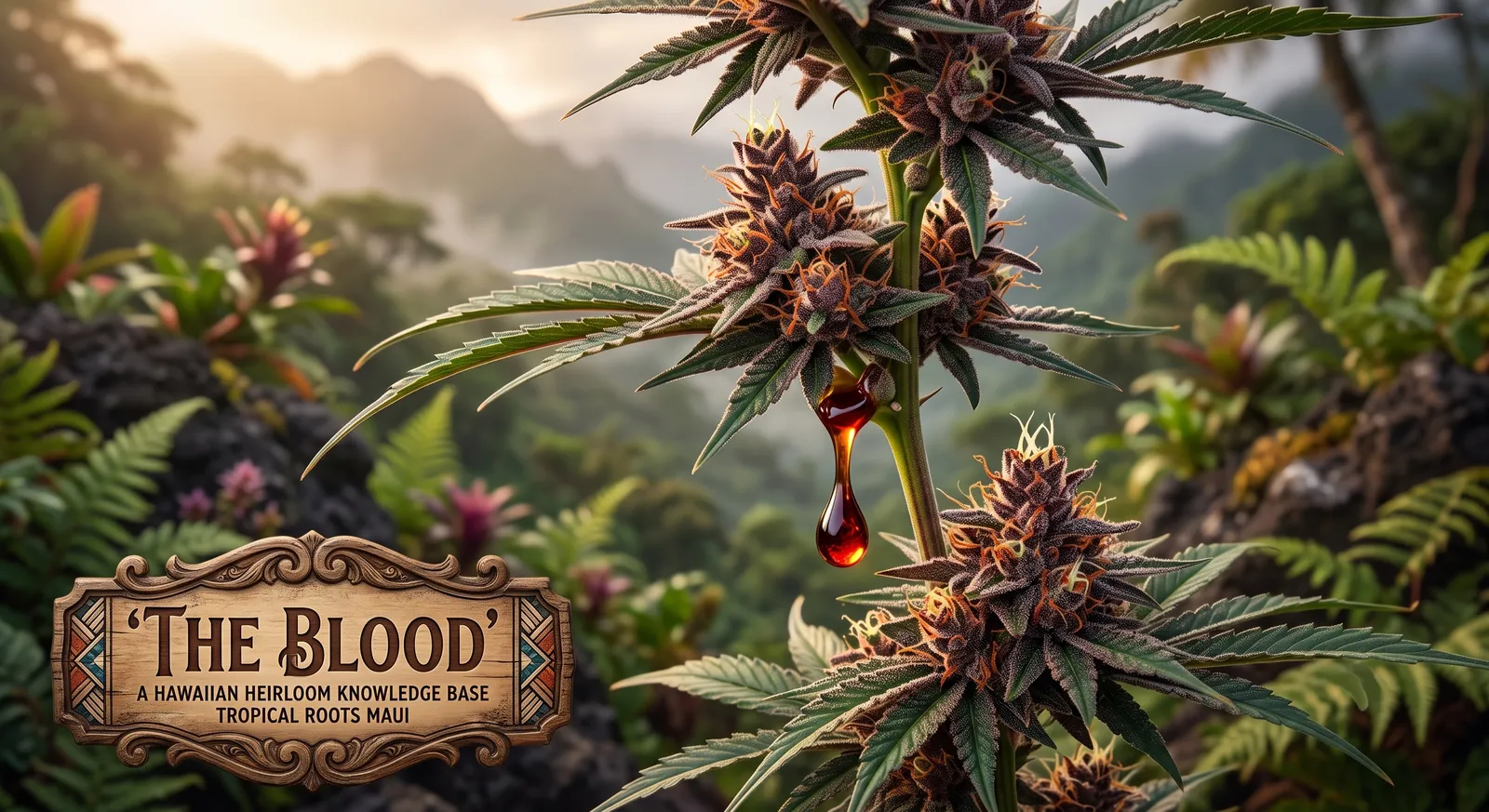
The Blood is a phenotype, not a strain
This is the thing most people get wrong, and it is worth stating plainly before anything else. The Blood is not an individual strain. She is a phenotype, an expression that shows up in Hawaiian genetics, and she turns up across many different Hawaiian strains rather than belonging to any one of them.
Local growers in Hawaiʻi named her in the 1970s for what they were looking at: a red bloodline running up the stem and out through the leaf veins, and a red, sticky, sap-like excretion that bleeds from the plant when it is cut. The name was a description of a trait, and it stayed a description of a trait. Somewhere along the way the wider market mistook it for a cultivar.
Ask growers on the islands and they will tell you the same thing: finding the blood is like winning the lottery. You do not order it. You go looking for it, and most of the time you do not find it.
What you are actually looking for
There are three characteristics that turn up when pheno hunting Hawaiian strains. A plant may show one of them, or more than one.
1. The sap
A rare, blood-like sap that bleeds when the plant is cut. This is the rarest of the three and the one that gave her the name.
2. The bloodline
The Hawaiian bloodline phenotype proper: deep red blood veins running from stem to leaf, unmistakable once you have seen it.
3. The resin
The one you meet last. Burn a Hawaiian doobie carrying this expression and the red resin bleeds out the crutch and stains everything it touches, the same vivid red as the dirt of Maui and Kauaʻi.
The hunt, and the ʻohana that keeps it
Here is the hard part. There is no guarantee that seeds made from a blood pheno will produce offspring that also show the blood phenotype. Cross two carriers and you may get nothing. That is not a failure of the breeder; it is how the expression behaves.
Which is also, as island growers put it, the fun of it. The hunt is the point: popping the beans, watching the stems, cutting one to see what runs out, and every so often finding the Kona golden ticket. When someone does find her, the phenotype is preserved the only way it reliably can be, by taking clones and sharing them with ʻohana. Family keeps the cut alive when seed will not.
If you want to practise the selection thinking behind that before you spend a season on it, we built Pheno Hunt for exactly this, and the pheno hunting guide covers how to run the search properly.
How to grow The Blood
Environment
Plants carrying the trait run as island sativas, asking for what island sativas always ask for: warmth, light, and time, though at 10 to 11 weeks she is more manageable than the longest lines in the chain. She is run Hawaiian style, 11/13, and takes to indoor and outdoor equally. The 11–13 week cycle rules out a short northern summer outdoors; mainland growers above the subtropics should plan for an indoor flower to give her room to finish.
Structure
Expect a lanky, stretchy sativa with plenty of vertical reach. Early topping and low-stress training keep the canopy in check and light on the lower buds. Give her support: the long flowering stretch produces tall, slender colas.
Feeding
Like all Hawaiian heritage lines, The Blood wants living, microbially-active soil rather than salt-based nutrients. Build a soil from the DIY Organic Living Soil Guide or feed with KNF inputs. Go easy on nitrogen in late flower and let her come home on a natural fade, which shows her crimson tones at their most vivid.
Pest resistance
The same humid tropical environment that shaped her also shaped the pests that hunt her, and a long flowering window means more time exposed. Treat preventatively with Beauveria bassiana or stick to the white oil schedule.
Harvest
Read the trichomes, not the calendar and not the color. Crimson lines can look finished long before the resin is ripe, so check the heads under magnification and harvest on trichome maturity. See the Trichome Harvest Guide.
Lineage & preservation
The Blood has no seed-bank paper trail, and we won't invent one. What we can say is how a line like this survives: passed quietly hand to hand through the eradication years, kept alive by a few island seed savers rather than any commercial catalog. That kind of keeping is what Pua Mana ʻOhana and their Pua Mana 1st Hawaiian Pakalōlō Seed Bank have built into real preservation work, holding Hawaiian heirloom and landrace genetics together and putting them back within reach of growers. That is the honest shape of her provenance, grower to grower, valley to valley, held onto because someone thought she was worth keeping.
The one modern thread we can name: the Maui breeder Sticky Finger Seeds created the Maui True Blood line, working the crimson genetics forward for a new generation of growers. What we steward is the older hand-to-hand cut, but that kind of preservation work is part of why the Blood's lineage still runs at all.
Because she is so rare, we treat The Blood as a preservation piece, not a product. We don't sell the old cut from a catalog; the living, available form of these genetics is the Maui True Blood line above. What we do is protect the heritage line and the lore around it, and point growers to where the crimson genetics can actually be found.
This is not a strain we'll ever scale. It's a strain we'll keep alive.