The Natural Fade
Reclaiming the Mana
Senescence over Flushing · The Living Soil Harvest Transition
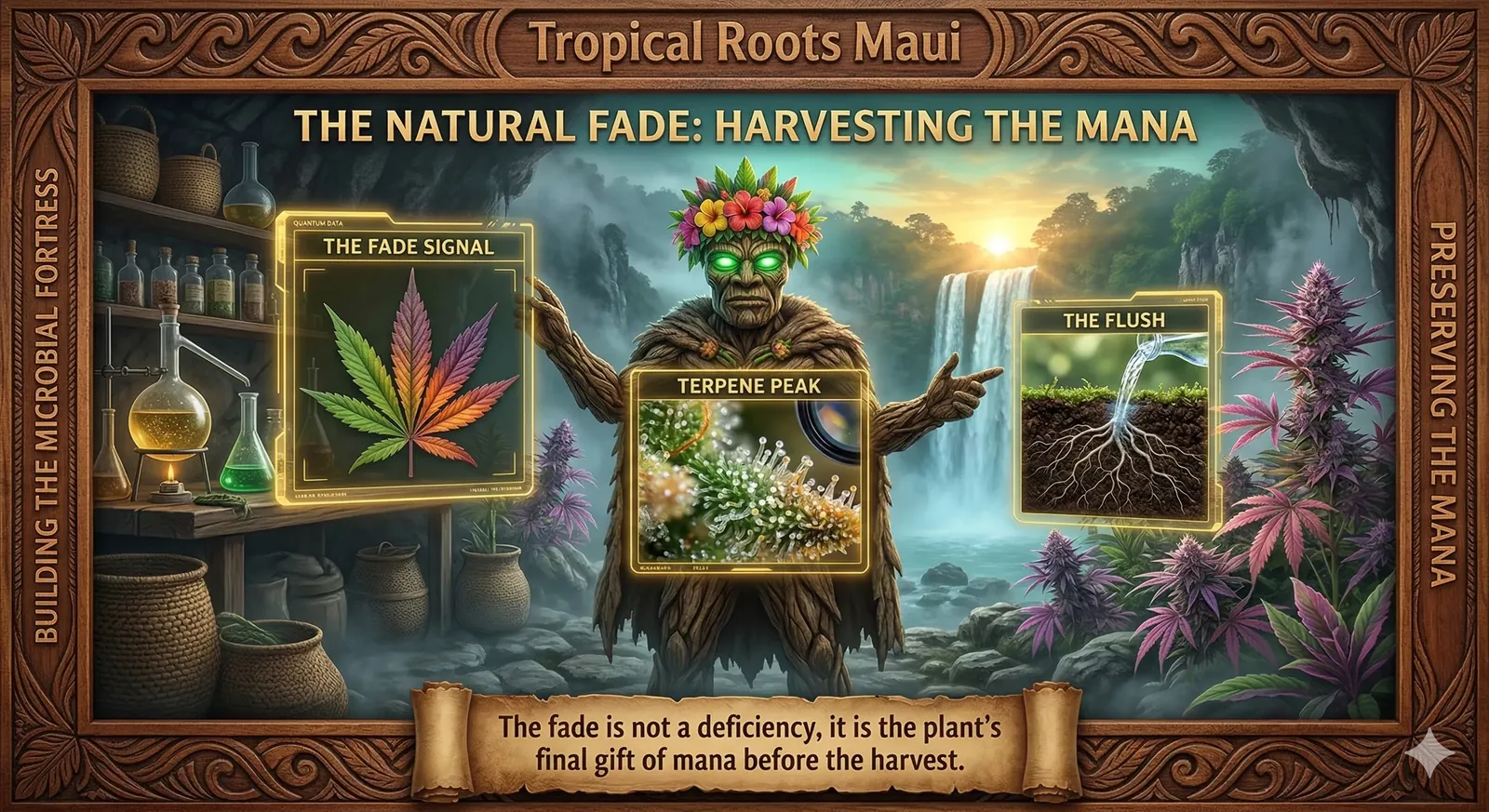
"Do not force a plant to stay green until harvest. A plant that is dark green on harvest day is hoarding unprocessed nutrients. Let it starve slightly at the end; suffering breeds resin, and the fade reclaims the pure mana."
In the Tropical Roots Maui sanctuary, the end of a plant's life is just as critical as its beginning. In a living soil system, flushing is not only unnecessary: it is deeply destructive. Instead, we allow the plant to naturally transition into senescence: the Natural Fade.
When grown purely in living soil, the plant is in complete control of what it eats. There are no excess synthetic salts forced into its tissues, which means there is nothing to "flush" out.
Heavy, continuous watering at the end of the flowering cycle saturates the soil, suffocates the root zone, and drops oxygen levels. This breeds anaerobic bacteria and invites root rot (Pythium, Fusarium) right as the flowers are at their heaviest and most vulnerable. In living soil, flushing destroys months of carefully built microbial infrastructure for zero benefit.
Senescence is the plant's natural, programmed end-of-life sequence. As the days grow shorter and the plant senses its impending death, it stops pulling nutrients from the soil. Instead, it begins to cannibalize itself, breaking down the mobile nutrients (nitrogen, phosphorus, potassium) stored in its large fan leaves and pushing them directly into the flowers to finish resin production.
By simply maintaining your normal watering practices (using your Aquifer SIP system or gentle top-watering) and stopping any heavy top-dresses in the final 2–3 weeks, you allow this natural transfer of mana from the leaves to the flowers. The plant does all the work: your job is to step back and let senescence complete.
This applies to living soil only. If you're growing in synthetic salt-based media (coco, rockwool, hydro), flushing may still be beneficial to remove accumulated mineral salts. The Natural Fade protocol is specifically designed for organic, living soil systems where the plant feeds through the microbial food web.
As the plant consumes its own nitrogen reserves, the green chlorophyll in the leaves begins to degrade. This breakdown is what reveals the hidden, alchemical colors beneath: the visual signature of a properly fading canopy.
During vegetative and early flowering stages, the plant is packed with nitrogen-rich chlorophyll, which makes it look bright green. This green pigment is so dominant that it masks other color compounds that have been present in the tissue all along, hidden beneath the green.
As the chlorophyll fades, compounds called anthocyanins become visible. Depending on the genetics of the cultivar and cooler nighttime temperatures, your canopy will display brilliant shades of yellow, deep purple, bright red, or even black. These are the same pigments that color autumn leaves, blueberries, and red cabbage.
A beautiful, multi-colored canopy with yellowing, dying fan leaves at harvest time is the hallmark of a master cultivator. It proves the plant has successfully consumed its reserves and that the final flower will smoke smoothly, burning down to clean, white ash. Don't fear the fade. Celebrate it.
The Natural Fade is a visual indicator that harvest is approaching, but it must be paired with microscopic observation to time the chop perfectly.
Do not panic when the large, lower fan leaves turn completely yellow, wither, and drop off during the final two weeks. This is the plant shedding dead weight after extracting its mana. Remove fallen leaves from the mulch layer to prevent botrytis (bud rot) as humidity fluctuates near harvest.
As the fade progresses, you will notice the calyxes (the teardrop-shaped bracts that make up the buds) swelling significantly. This final swell is the plant's last push to produce resin and attract pollinators. The buds will feel denser and heavier in the final week: this is peak mana accumulation.
The fade tells you the season is ending, but the trichomes tell you the day. Always verify your harvest window using a jeweler's loupe (60x) or digital microscope. Look for the perfect ratio: mostly milky/cloudy heads with 10–20% amber. Clear = too early. All amber = past peak. The trichomes are the final word.
Maui's warm climate means plants may fade slightly later than mainland grows: the consistent warmth keeps chlorophyll production active longer. Don't rush it. In tropical outdoor grows, the fade often begins in the final 10–14 days rather than the 2–3 weeks seen in cooler climates.
As fan leaves drop and airflow through the canopy changes, monitor humidity closely. Maui's ambient humidity (65–80%) during the wet season creates prime botrytis conditions. Defoliate dead leaves immediately, improve airflow with fans, and consider harvesting slightly early if humidity spikes above 70% for extended periods.
Maui's latitude (20°N) means photoperiod shifts are more subtle than northern grows. Outdoor plants may not receive the dramatic day-length drop that triggers aggressive senescence. This often results in a slower, more gradual fade, which is actually ideal for living soil, as the nutrient transfer happens more completely.
If running the Aquifer Protocol, do not change your watering during the fade. The SIP system's wet/dry cycle is already perfect for late-flower senescence. The plant will naturally drink less as it shuts down: the float valve simply opens less frequently. No adjustments needed.
For educational purposes only. This guide covers organic cultivation techniques for legal cannabis. The Natural Fade protocol is designed for living soil systems: it does not apply to synthetic salt-based growing media. Always follow local agricultural regulations and laws. The information provided is not a substitute for professional consultation.