Worm Bin Mastery
The Heart of the System
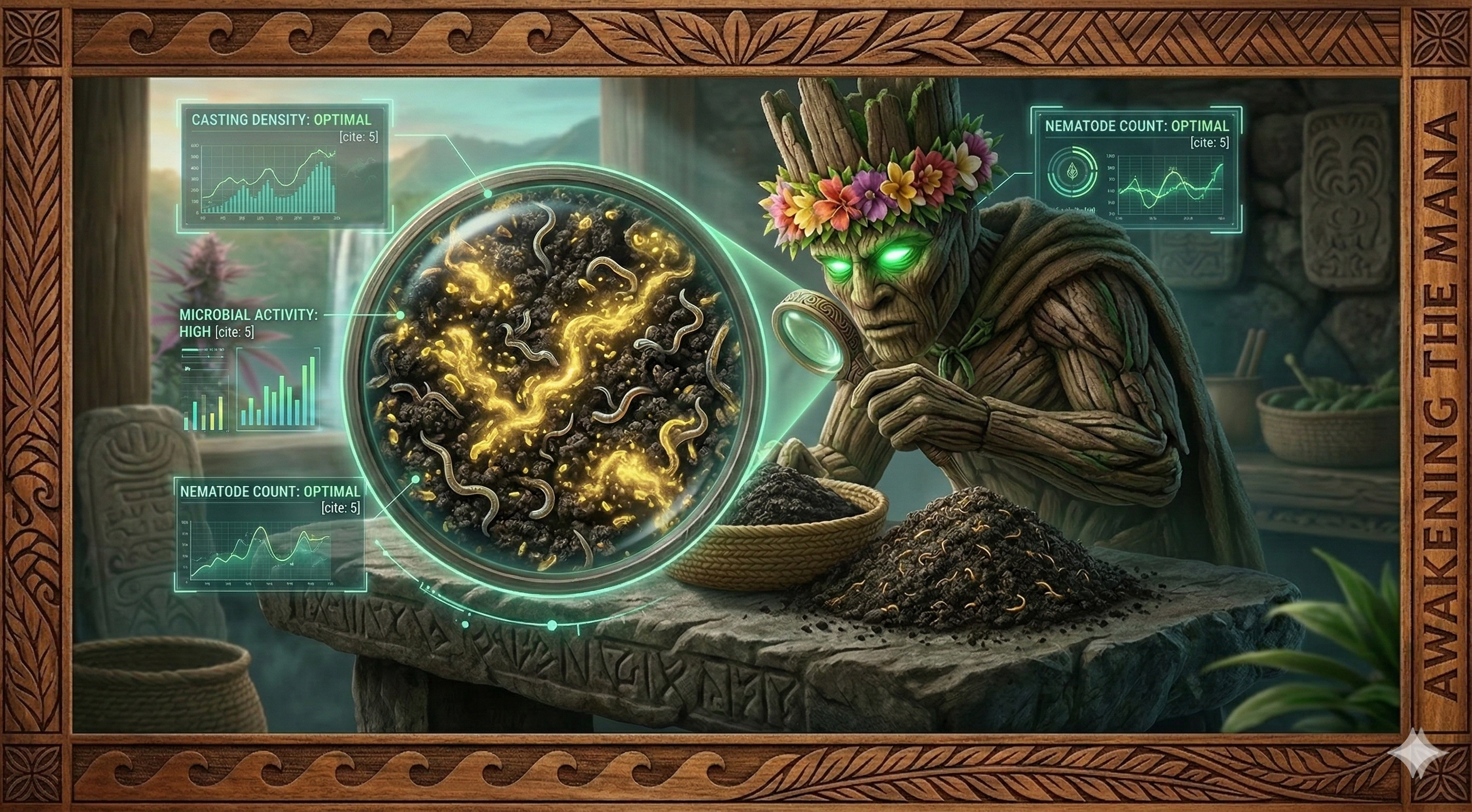
In the Alchemical Sanctuary, we don't just dispose of organic waste — we transmute it into the most potent biological resource on the island: Black Gold. If the soil is the fortress, the worms are the master engineers. This isn't just fertilizer — it is a concentrated dose of mana for your plants.
"The worm asks nothing of the grower but patience and darkness. In return, she gives the soil its soul." — Kānehiwa
To harvest castings without disturbing the delicate living laboratory of the colony, we use a vertical migration system — a stack of trays with perforated bottoms that lets worms move upward toward fresh food, leaving finished castings behind.
🛏️ The BeddingStart with a base of shredded damp cardboard, coconut coir, and aged leaf litter. This mimics the forest floor — the worms' natural habitat. The bedding should feel like a wrung-out sponge: moist but never dripping. Add a handful of garden soil or finished compost to introduce beneficial microbes that kickstart the decomposition process.
📦 The TiersAs the worms finish the food in the bottom tray, they migrate upward through the holes in the next tray to reach fresh scraps. This natural behavior means you never have to manually sort worms from castings — gravity and biology do the work for you.
✨ The ResultThe bottom tray eventually becomes 100% pure "Black Gold" — free of worms and ready for the garden. When it looks and smells like dark, rich coffee grounds with an earthy forest floor aroma, it's ready to harvest.
Worms don't technically eat the food scraps — they consume the microbes that colonize the decaying matter. This is why fresh scraps need time to break down before the worms can process them, and why a healthy bin teems with microbial life far beyond just the worms themselves.
✅ The DietFruit peels (no citrus), vegetable scraps, crushed eggshells (a WCA precursor that buffers pH and adds calcium), and spent coffee grounds (excellent nitrogen source that worms love). Chop or blend scraps into smaller pieces to speed decomposition — the more surface area, the faster the microbes colonize.
📖 The RitualAlways bury the food under a layer of bedding. This prevents fruit flies ("pests of the darkness"), keeps moisture levels balanced, and ensures the worms can approach the food from below in their comfort zone. Rotate where you bury the food — left side one week, right side the next — to encourage the worms to work the entire bin evenly.
Meat, dairy, and oils — attract pests, create anaerobic conditions, and produce foul odors. Overly acidic citrus (lemons, limes, oranges) — drops the bin pH too low and irritates worm skin. Onions and garlic — natural pest repellents that also repel worms. Treated or glossy paper — contains chemicals that harm the colony. Pet waste — introduces pathogens that can transfer to food crops.
Harvesting should be a gentle process that respects the sanctuary of the colony. Never rush it — stressed worms produce less and reproduce slower.
📦 The Migration Method (Tiered Bins)If using a tiered bin, simply remove the bottom tray once its contents look like dark, rich coffee grounds with no recognizable food scraps. The worms will have already migrated upward to the fresh food in the upper trays. This is the cleanest, easiest harvest method.
☀️ The Light Method (Single Bins)For single-bin systems, pile the castings into small cones under a bright light (or the Maui sun). Worms are light-sensitive and will dive to the center of each cone to escape the light.
🪒 The ShaveEvery 10 minutes, gently "shave" the outer layer of worm-free castings into a collection bucket. The worms keep diving deeper. Continue until only a small ball of worms remains at the bottom — return them to the bin with fresh bedding and food. The harvested castings should be dark, crumbly, and smell like a forest floor after rain.
Apply a 1-inch layer of fresh castings to the surface of your cannabis fabric pots, then water in gently. The nutrients and microbes will percolate down through the soil with each watering, continuously feeding the microbial fortress from above. Top dress every 2–3 weeks during veg and every 3–4 weeks during flower.
Suspend a handful of castings (approximately 1 cup) in a 5-gallon bucket of dechlorinated water with a dash of FPJ (Fermented Plant Juice) as a microbial food source. Drop in an aquarium air pump and aerate for 24 hours to multiply the beneficial microbe populations explosively. The resulting tea is a concentrated biological super-charge for your soil. See the Organic Teas Guide for detailed brewing protocols.
Apply as a soil drench within 4–6 hours of stopping the air pump — the microbial populations begin dying once aeration stops. On Maui, apply within 2–4 hours due to our warm temps accelerating the die-off.
- Species: Red Wigglers (Eisenia fetida) — NOT earthworms from your garden
- Start with 1 lb of worms per square foot of bin surface area
- Bedding: shredded cardboard + coconut coir + aged leaf litter, damp like a wrung-out sponge
- Feed: fruit/veg scraps (no citrus), coffee grounds, crushed eggshells — bury under bedding
- Avoid: meat, dairy, oils, citrus, onions, garlic, treated paper, pet waste
- Temperature: 55–80°F ideal — worms die above 85°F and below 40°F
- Harvest every 3–4 months using the migration or light-shave method
- Top dress: 1-inch layer on fabric pots every 2–3 weeks (veg) or 3–4 weeks (flower)
- Worm tea: 1 cup castings + 5 gal dechlorinated water + FPJ, aerate 24 hours, apply within 4 hours
- Store castings in breathable containers in a cool, shaded spot — never sealed airtight
- In Hawaiʻi: keep bins shaded, harvest in morning light, feed 2–3x weekly, combine tea with IMO + LabS
This guide is provided for educational purposes only. Always research local laws and regulations before cultivating.