🧬   Knowledge Base · Plant Science
The Big 5 Cannabis Terpenes (Mastering the Mana Profiles)

The Big 5
Cannabis Terpenes

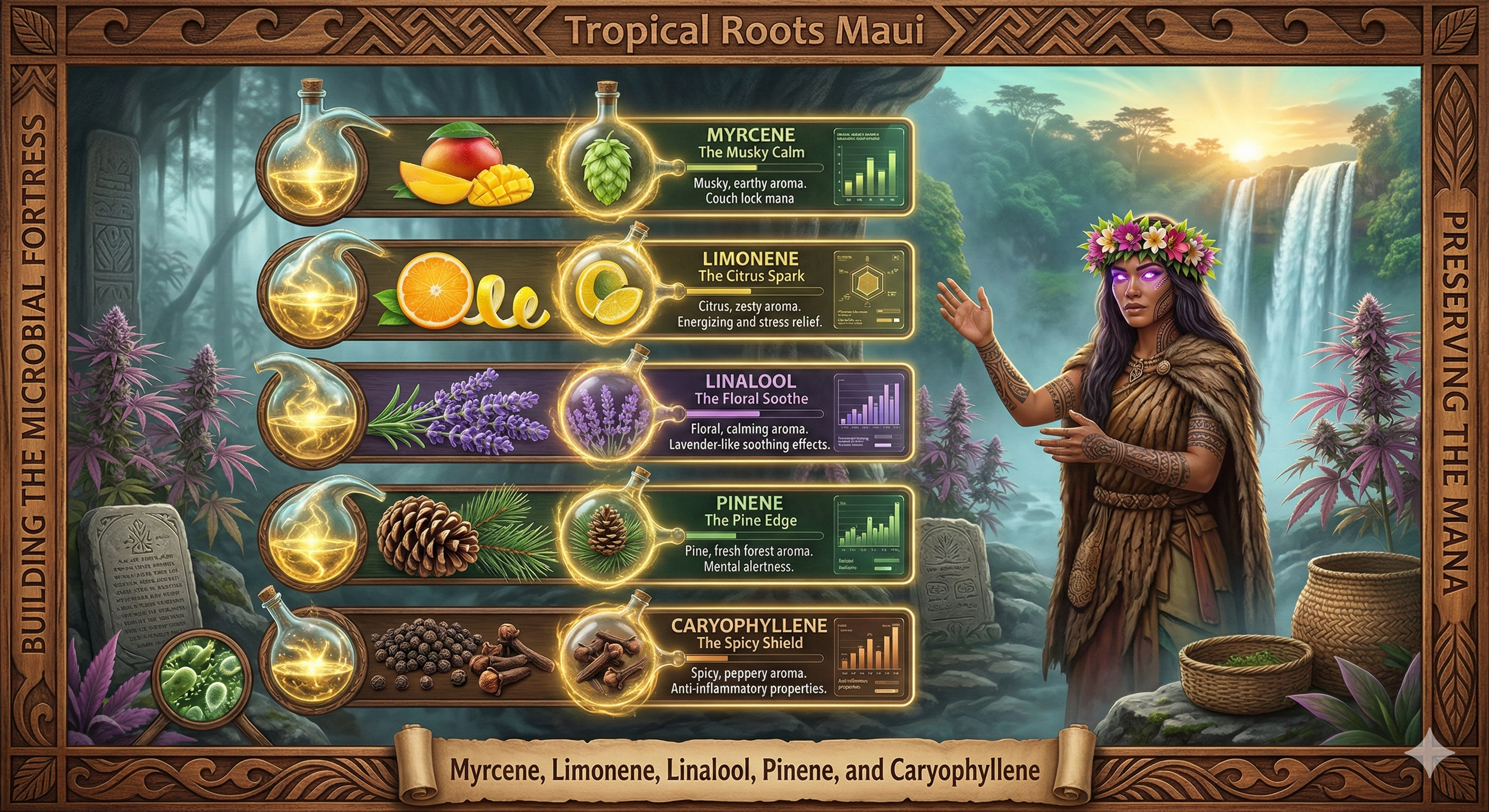
Lock in the potent mana. Kānehiwa walks you through our precise five-pillar guide to mastering the Big 5 cannabis terpenes—Myrcene, Limonene, Linalool, Pinene, and Caryophyllene. Discover how to build your microbial fortress, utilize competitive exclusion, and maintain precise environmental targets to fuel the entire curing cycle and preserve every drop of tropical essence. (All values illustrative).

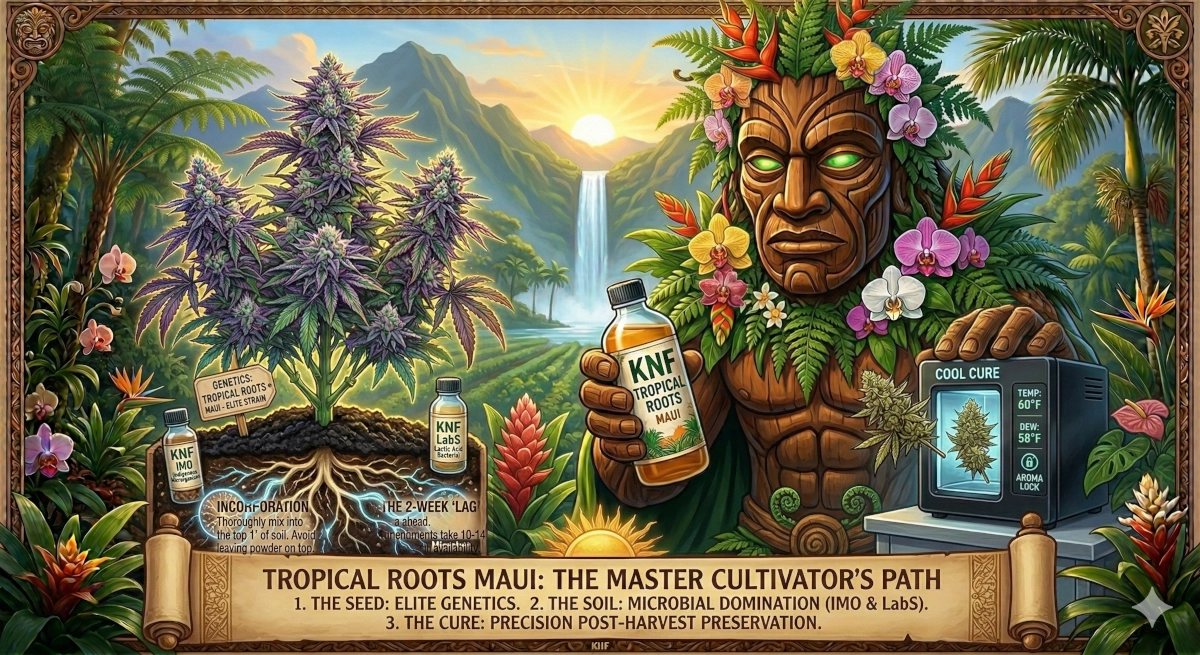
Tropical Roots Maui: The Master Cultivator's Path

Mastering the elements from seed to shelf. Kānehiwa guides you through elite genetics, KNF microbial soil health, and precision post-harvest curing.

🧪
The Entourage Effect. Terpenes don't just smell good — they modulate how cannabinoids interact with your body. Myrcene enhances THC absorption. Caryophyllene binds directly to CB2 receptors. Pinene counteracts THC-induced memory loss. The terpene profile of a strain determines its character more than its THC number ever will.
🧬 Topic Terpenes
📋 Count The Big 5
🎯 Goal Flavor & Effect
📊 Level Beginner
🧬 The Big 5 Cannabis Terpenes
🥭
Myrcene
The Heavy Hitter
🌬️ Aroma Earthy, musky, cloves, and slightly fruity. ⚡ Effects The quintessential "couch-lock" terpene. Myrcene promotes deep relaxation, sedation, and muscle relief. If a strain has more than 0.5% myrcene, it will typically produce a heavy Indica effect — regardless of whether the strain is genetically Indica or Sativa. Myrcene also enhances the absorption of THC across the blood-brain barrier, making it the "potency amplifier" of the terpene world.
🌿 Also found in: Mangoes, lemongrass, thyme, and hops.
🍋
Limonene
The Uplifter
🌬️ Aroma Strong citrus, lemon, and orange rind. ⚡ Effects Highly uplifting, energetic, and mood-elevating. Limonene is excellent for stress relief and focus, commonly dominating Sativa-leaning profiles. It's the terpene behind that "happy, clear-headed" high — the one that makes you want to go for a hike, not melt into the couch. Limonene also has strong anti-fungal properties, which is why citrus oils are natural cleaners.
🌿 Also found in: Citrus fruit rinds, rosemary, and peppermint.
🌶️
Caryophyllene
The Spicer
🌬️ Aroma Sharp black pepper, wood, and spicy cloves. ⚡ Effects This is the only terpene that also acts as a cannabinoid, binding directly to CB2 receptors in the body. It provides excellent anti-inflammatory and pain-relieving effects without physical sedation — making it the go-to terpene for daytime pain management. It's why cracking black pepper is sometimes recommended to "calm down" a too-intense THC high.
🌿 Also found in: Black pepper, cloves, and cinnamon.
🌲
Pinene
The Focus Enhancer
🌬️ Aroma Fresh pine needles and sweet woods. ⚡ Effects Alertness, memory retention, and focused energy. Pinene also acts as a bronchodilator (helps open airways), which is why walking through a pine forest feels so refreshing. It often counteracts the short-term memory loss associated with THC — making high-Pinene strains ideal for creative work where you need to stay sharp. Pinene is the most abundant terpene in nature.
🌿 Also found in: Pine trees, rosemary, dill, and basil.
💜
Linalool
The Calmer
🌬️ Aroma Floral, sweet, lavender, and slightly spicy. ⚡ Effects Profoundly calming and anti-anxiety. Linalool has strong sedative properties and helps balance out the raciness of high-THC or high-Limonene strains. It's the terpene that turns an anxious, heart-racing high into a smooth, peaceful one. This is why lavender has been used for centuries as a sleep and relaxation aid — Linalool is the active compound.
🌿 Also found in: Lavender, birch bark, and rosewood.
🌺 Hawaiʻi Island Tip — Terpenes You Can Smell in the Air Living on Maui gives you a natural advantage in understanding terpenes because you're surrounded by them every day. The Myrcene in the mango trees ripening in your yard, the Limonene in the citrus groves upcountry, the Pinene in the Cook Island pines along the coast. When you learn to identify these aromas in nature, you'll start recognizing them in your flower — and understanding why certain strains make you feel certain ways.
🔬 The Secret to Terpene Preservation

Growing massive, frosty buds is only half the battle — keeping the terpenes intact after you chop the plant is where most growers fail. Terpenes are highly volatile, meaning they evaporate easily at room temperature. The tropical heat and humidity of Maui can strip a harvest of its best smells in a matter of days if left unchecked.

1
The Organic Advantage

Cultivating with complex organic soil microbiology — like your KNF inputs or Gaia Green amendments — naturally boosts the plant's secondary metabolites, resulting in a much higher initial terpene concentration than synthetic nutrients. A living soil with diverse microbiology communicates with the plant's root system, triggering the production of defensive compounds — and many of those defensive compounds are terpenes. This is why organic flower consistently smells louder than hydro.

🌺 Hawaiʻi Island Tip — Maui's Biology Boosts Terpenes Hawaiʻi's year-round warmth creates an incredibly active soil microbiome that drives terpene production higher than mainland grows. The same KNF IMO that colonizes your root zone in 48 hours (vs 7–10 days on the mainland) is also signaling your plant to produce more secondary metabolites. Maui-grown organic flower often tests 2–4% total terpenes vs 1–2% from indoor hydro — the biology difference is measurable.
2
Precision Curing

To truly lock in these volatile compounds after harvest, environmental control is everything. Relying on precision technology, like a Cool Cure C+ unit, allows you to dictate the exact dew point and temperature. This prevents the evaporation of lighter monoterpenes (like Limonene and Pinene) that usually gas off in a fluctuating, standard hang-dry environment.

Monoterpenes (the "light" terpenes — Limonene, Pinene, Myrcene) begin evaporating at 70°F (21°C). Sesquiterpenes (the "heavy" terpenes — Caryophyllene, Humulene) are more stable and survive higher temperatures. This is why a hot, uncontrolled dry room smells amazing for the first 24 hours — those are your best terpenes leaving the flower forever.

🌺 Hawaiʻi Island Tip — Drying on Maui Is the Boss Fight Maui's ambient temps (78–85°F) and humidity (60–80%) are terpene destruction conditions. Without active climate control, you will lose the majority of your monoterpenes (Limonene, Pinene) within the first 48 hours of hang-drying. A precision curing unit or a dedicated dry room with AC and a dehumidifier is non-negotiable for preserving the terpene profile you spent 10+ weeks building. See the 5-Day Drying Guide for the full Maui-optimized protocol.
3
Light Degradation

UV light destroys terpenes. Once harvested, buds should be dried, cured, and stored in total darkness. UV radiation breaks down the chemical bonds in terpene molecules, converting them into odorless byproducts. This is why flower that's been sitting in a clear glass jar on a dispensary shelf smells flat — the light has already degraded the volatile compounds. Use opaque containers (dark glass, stainless steel, or UV-blocking bags) and store in a cool, dark location.

🌺 Hawaiʻi Island Tip — Maui Sun Is the Enemy Post-Harvest Maui receives some of the most intense UV radiation on the planet — the same sun that grows incredible flower will destroy that flower's terpene profile in hours if exposed post-harvest. Dry in a lightproof space. Cure in amber or opaque jars. Store in a cool, dark interior closet — never a shed, garage, or any space with windows. If you're transporting cured flower, use UV-blocking bags and keep it out of direct sunlight, even for short trips.

🪶   Kānehiwa's Words

"The flower speaks through its scent. Each terpene is a word — Myrcene whispers rest, Limonene sings joy, Linalool hums peace. The plant has been writing this language for millennia. Your job is not to create the scent — it is to protect what the plant has already said." — Kānehiwa

📚 Related Guides
>

This guide is provided for educational purposes only. Always research local laws and regulations before cultivating. Tropical Roots Maui assumes no responsibility for actions taken based on this information.