The Art of
Temple Ball Hash
Frenchy Cannoli Style · From the Loose Grove to the Sacred Sphere
"A perfect Temple Ball never lies. It must be so smooth that it reflects the golden-teal sunrise. A rough surface is a weak fortress."
When you transform loose, frozen trichomes into a unified, aged Temple Ball, you are not just changing its form; you are sealing its soul. This guide follows the Ice Water Hash extraction, moving from the cold separation to the warmth of Frenchy Cannoli's timeless craft.
Prerequisites & Materials
This guide assumes you have already completed the Ice Water Hash extraction and have dried, loose trichomes ready for pressing. Gather these materials before beginning the ritual.
Your starting material: fully dried, loose trichomes from the 73μ–120μ bags (the "full melt" range). The hash must be completely dry: any residual moisture will cause mold during aging. Break it into a fine, sandy consistency before pressing.
A standard rubber or silicone hot water bottle filled with just-boiled water (~200°F). This is your pressing instrument: the gentle, distributed heat is what makes Frenchy's method superior to mechanical presses.
A high-temp nylon or silicone sheet (turkey oven bags work perfectly). This wraps your hash during pressing and prevents it from sticking. Parchment paper can be used as a secondary layer.
Cellophane wrap (not plastic wrap; cellophane is porous and allows minimal gas exchange) and an airtight glass jar for the cellar cure. Amber or violet glass is ideal for light protection.
Hot Water Pressing: Heat & Pressure
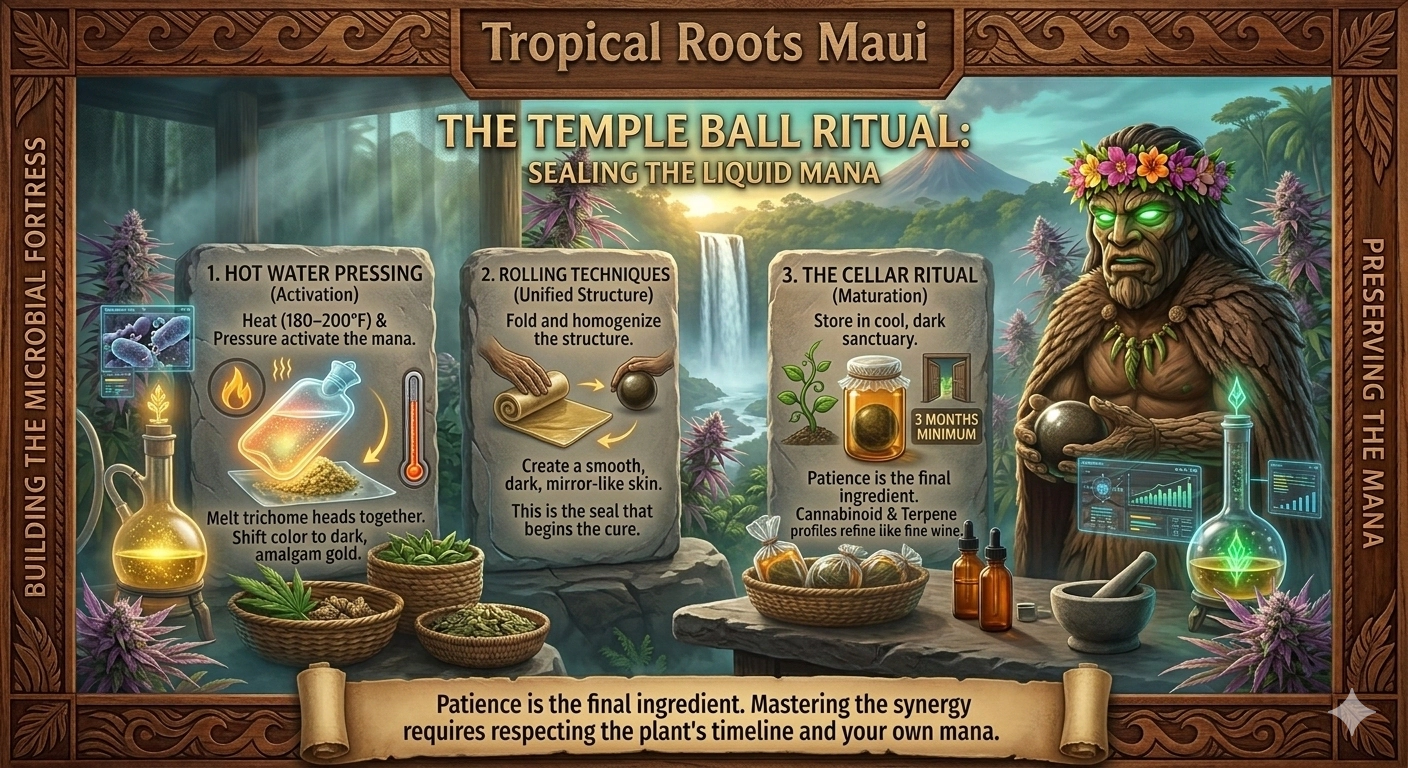
To "french" your loose hash, you must activate its internal oils. This is not about brute force: it is gentle, alchemical warmth that melts the trichome heads into a unified amalgam.
Fold your dry, loose Ice Water Hash inside a food-grade, high-temp nylon or silicone sheet. Create a flat, even packet: no clumps or air pockets. The hash should be spread in a uniform layer no thicker than 5mm.
Fill your hot water bottle with just-boiled water (approximately 200°F). Place the hash packet on a clean, hard surface. Press the bottle firmly onto the packet, allowing the distributed heat to begin melting the internal mana: the delicate Big 5 Terpenes and cannabinoids fuse together under warmth.
Press for 30–60 seconds, then open, fold the slab in half, re-wrap, and press again. Repeat this cycle 15–20 times. Each fold homogenizes the structure further. Flip the packet between presses to ensure even heat distribution. Refill the bottle with fresh hot water as it cools.
You are melting the trichome heads together into a single mass. Watch for the color shift: from golden-brown granules to a dark, uniform, semi-translucent gold. The texture should become pliable, almost taffy-like. When the entire slab is homogeneous with no visible granules, pressing is complete.
Temperature discipline: The water bottle method naturally regulates heat as it cools, which is its genius. Never use a heat gun, hair dryer, or direct flame: these create hotspots that destroy terpenes instantly. If the hash starts to smell sharp or burnt, stop and let it cool before continuing.
Rolling & Unified Structure
Once pressed, you have an activated slab. Now you must unite it into a perfect microbial fortress: the sacred sphere that will age and mature into something extraordinary.
Take the warm hash slab and begin folding it inward upon itself repeatedly, like kneading bread dough. Each fold layers the internal structure and homogenizes the cannabinoid and terpene distribution throughout the mass. Aim for 10–15 final folds.
Place the folded mass in the center of your palm. With your opposite hand, use firm, consistent pressure to roll it into a sphere. Start with broad circular motions to establish the shape, then tighten into smaller, more precise rolls. The warmth of your hands continues the gentle activation.
Continue rolling until the friction and body heat create a smooth, dark, mirror-like skin on the surface. This outer seal is critical: it becomes the barrier that protects the interior during the aging process. The surface should be uniformly glossy with no cracks, seams, or rough patches.
The Cellar Ritual: Aging
A Temple Ball is not a fast edible; it is fine wine. Rolling is just the birth; aging is the maturation. This is where the alchemy truly happens.
Place your newly rolled sphere in a cool, dark environment at 55–60°F with stable humidity. This is your Alchemical Sanctuary: a cellar, wine fridge, or temperature-controlled closet. Let it breathe unwrapped for 3–5 days until the internal and external moisture equilibrates.
Once stabilized, wrap the Temple Ball in cellophane (which is porous, allowing minimal gas exchange, unlike plastic wrap which traps moisture). Place the wrapped sphere inside an airtight glass jar. Store for a minimum of three months in the same cool, dark sanctuary.
Patience is the final ingredient. Over time, the internal cannabinoid profiles slowly transform: THCA converts to THC, and trace amounts of CBN develop. The terpene profiles oxidize and merge, creating complex new aromatic compounds. The harsh green chlorophyll taste disappears entirely, leaving a smooth, earthy, extraordinarily complex aroma and flavor.
Hawaii-Specific Tips for Temple Ball Craft
Crafting and aging Temple Balls in Hawai'i's tropical climate presents unique challenges. Heat and humidity are the two forces you must manage carefully.
Maui's ambient temperatures rarely drop below 70°F, well above the ideal 55–60°F aging range. A wine fridge set to 55°F is the most reliable aging sanctuary on-island. Without temperature control, the cannabinoids degrade faster and the terpene profile can flatten.
Hawai'i's humidity can exceed 80% on wet-side locations. Use a small silica gel packet inside the aging jar (not touching the ball) to buffer moisture. Check monthly: if condensation appears inside the jar, unwrap the ball, let it breathe for 24 hours in a dry room, then re-seal.
If you're upcountry Maui (Kula, Makawao, Haleakalā slopes), your cooler nighttime temperatures (55–65°F) naturally create better aging conditions. A dark pantry or closet on the cooler side of the house can work without a wine fridge; check temps with a thermometer to confirm.
Hawai'i-grown cultivars acclimated to tropical conditions often produce trichomes rich in Myrcene and Caryophyllene. These terpenes age beautifully, developing deep earthy and spicy notes over time. Island-grown hash tends to produce exceptionally aromatic Temple Balls.
Frenchy Cannoli (1956–2021)
"Hash is a living thing. It breathes, it evolves, and given enough time, it becomes something far greater than what you started with."
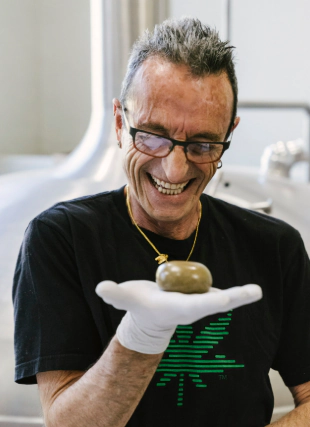
Frenchy Cannoli · 1956–2021
This guide is deeply indebted to the life and work of Frenchy Cannoli, born in Nice, France, and widely regarded as the world's foremost authority on traditional hashish craft. Over decades of travel through Morocco, Afghanistan, India, and Nepal, Frenchy studied the ancient art of hand-pressed hash directly from the cultures that invented it.
Settling in the San Francisco Bay Area, he dedicated his later years to teaching the cannabis community the science behind what he called "The Lost Art": the hot water bottle pressing technique, the importance of trichome-head separation, and the transformative power of long-term aging. His workshops, videos, and writings brought Temple Ball hashmaking from obscurity into the modern cannabis renaissance.
Frenchy passed away on July 18, 2021, but his legacy lives in every Temple Ball pressed with care and patience. The techniques in this guide (the hot water method, the fold-and-press cycle, the mirror glaze, and the cellar cure) are all rooted in his teachings. At Tropical Roots Maui, we honor his memory by passing this knowledge forward with the same reverence he showed to the plant.
Temple Ball Hash: Frequently Asked
What is a temple ball?
A temple ball is hand-pressed hashish rolled into a dense, polished sphere and aged, a technique that traces back centuries to Nepal and the Himalayan hash traditions. Pressing ruptures the trichome heads and fuses the resin into a single unified mass; the glossy outer "shell" seals the interior from oxygen so the hash cures and matures inside, like a fine wine or aged cheese.
How do you make temple ball hash?
Start with high-quality loose resin: ideally ice water hash (73–120μ trichome heads). Warm it with the hot water bottle technique, press and fold repeatedly until the resin fuses translucent, then hand-roll under pressure into a sphere and polish it to a mirror glaze. The full step-by-step (heat, pressure, rolling, and sealing) is covered in the sections above.
How do you smoke a temple ball?
Slice or break off a small piece; never crumble the whole ball, since the intact shell is what preserves the rest. Traditional methods work best: crumble a warmed piece over flower in a bowl or joint, smoke it in a hash pipe, or use a screen. Gentle heat first (rolled between the fingers) makes aged hash pliable. Keep flame contact indirect: you want it to bubble and melt, not char.
How long should a temple ball age, and how do you store it?
Aging is where the magic happens: a minimum of 2–3 months, and connoisseurs age for a year or more. Store the ball whole, in a cool, dark, stable environment (the "cellar ritual" above), wrapped in parchment or cellophane, never plastic bags. As it ages, the flavor deepens and the effect rounds out. Only cut what you'll use; the shell reseals poorly.
What do temple balls have to do with Frenchy Cannoli?
Frenchy Cannoli (1956–2021) was the master hashishin who brought temple ball craft from the Himalayan traditions into the modern cannabis renaissance, codifying the hot-water pressing method and championing long aging. This entire guide follows his teachings; see the memorial section above for his story and legacy.
For adults 21+ only. This guide is for educational purposes and applies to legal cannabis processing in compliance with your local laws. Temple Ball Hash is a concentrate: always dose carefully. The information provided is not medical advice. Store all cannabis products clearly labeled and out of reach of children and pets.