Storing Seeds
The Long Keeping
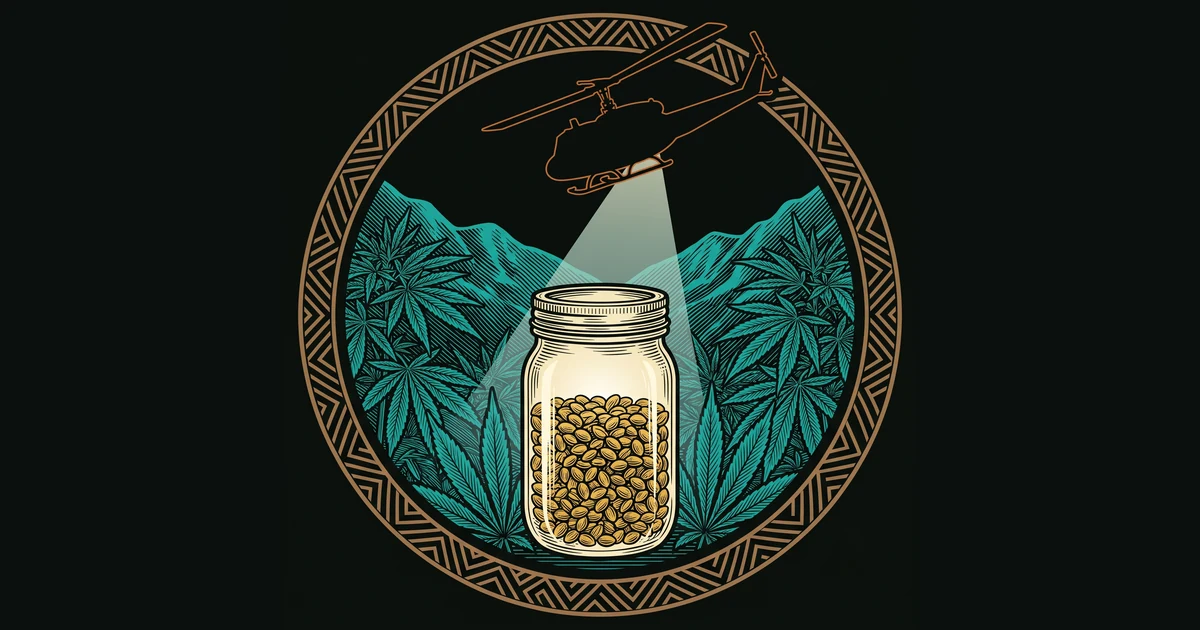
Growing a seed is the loud half of preservation. Keeping one alive in a jar for ten years, or fifty, is the quiet half, and it is the half most people get wrong. Cool, dark, and dry is the whole secret, but the details decide whether a heritage line waits patiently or dies in a drawer. This is how to store cannabis seeds so a line keeps its options open.
"A seed is a promise the plant makes to the future. Keep it cool, keep it dark, keep it dry, and the promise holds. Let the heat and the damp find it, and the promise is quietly broken while you sleep."
Why We Store Kānehiwa| Method | Temperature | Best For | Stays Viable |
|---|---|---|---|
| 🗃️ Cool Drawer | Room temp, dark | Seeds you will plant this season | ~1–2 years |
| 🧊 Refrigerator | 3–8°C / 38–46°F | Your working seed library | 5–10+ years |
| ❄️ Freezer | ≤ -18°C / 0°F | Deep preservation of a line | Decades (must be very dry first) |
| What You See | What It Means | Kānehiwa's Read |
|---|---|---|
| 🐅 Dark, hard shell, tiger-striped | Mature and well-formed: the best odds of a strong sprout. | "A ripe seed wears its age like armor. Trust it." |
| 🫥 Pale green or white, crushes easily | Immature or spent: low odds, but not always zero. | "Green wood does not burn. Test it before you count on it." |
| 🪨 Cracked, hollow, or rattling | Dried out too hard or damaged: viability is a gamble. | "An empty shell keeps no promise. Prove it lives first." |
Appearance only hints at maturity, not life. The only honest test is to try to germinate a few. Skip the old "float test" (sinkers live, floaters die); it is unreliable and a viable seed will often float simply because it is dry.
-
1Dry Down First: Moisture Is the Enemy
Water is what kills stored seed. A damp seed keeps breathing, burns through its reserves, and grows mold. A dry seed goes dormant and waits. Before anything else, make sure your seeds are fully dry: they should feel hard, look matte rather than glossy, and give a faint click when you drop a couple onto a plate. Aim for a storage humidity of 20–30% RH inside the container.
🌡️ The Two Rules That Matter Roughly, every drop in moisture and every drop in temperature buys you more time. Cool doubles the life of dry seed; dry doubles the life of cool seed. Get both right and years turn into decades.Never seal up seed that has just come off a fresh plant or a humid room. Let it finish drying in open air for a week or two first, or you will trap moisture in the jar with it.🌺 Hawaiʻi Island Tip: The Humidity Problem This is the step the islands make hardest. Ambient humidity here runs high, so seed that feels "dry" on the counter is often carrying more moisture than seed on the mainland would. A silica gel packet in the jar is not optional in Hawaiʻi, it is the whole game. Toss a fresh desiccant in, watch the RH card for a day, and do not commit a line to long storage until it reads in the 20–30% band and holds there. -
2Seal Airtight, With a Desiccant
Once the seed is dry, protect it from the three things that age it: moisture, oxygen, and light. A small glass jar with a good lid or a heat-sealed mylar bag both work. Drop in a silica gel packet, add a humidity card if you have one, and close it up.
🫙 A Good Seed Jar- Airtight beats pretty: a rubber-gasket jar or a sealed bag keeps humid air out between openings
- Silica gel holds the inside dry; rice works as a weaker backup if that is all you have
- Opaque or dark: light degrades seed over time, so keep the jar in a box or a closed drawer rather than on a sunny shelf
- Open it rarely: every time you open the jar in a humid room, you let moisture in. Take out what you need quickly and reseal
Keep small working amounts separate from your main stock. Pull a season's seeds into a little jar, and leave the deep-storage jar closed so it is not opened every time you want to plant. -
3Choose Your Cold
Where you keep the sealed jar decides how long the line waits. There are three honest tiers, and the right one depends on how soon you plan to grow it.
🗃️ A Cool Drawer: This Season- Dark, room temperature, stable. Fine for seed you will plant within a year or two
- No fridge shock, no fuss. Just keep it out of heat and light
🧊 The Refrigerator: Your Working Library- 3–8°C (38–46°F), sealed and dry, holds most cannabis seed viable for 5 to 10 years and beyond
- Keep the jar on a shelf, not in the door, where the temperature swings every time it opens
- This is the sweet spot for a seed saver: cold enough to last, easy enough to reach
❄️ The Freezer: Deep Preservation- At -18°C (0°F) or colder, properly dried seed can keep for decades; this is how gene banks hold a line for the long haul
- Dry first, without exception. Moist seed forms ice crystals inside its cells and dies. Freezing is only safe for seed that is already very dry and airtight
- No freeze-thaw cycles. Pick a jar you will not disturb; repeated warming and refreezing damages seed
- Warm before you open. Let the sealed jar come back to room temperature before cracking the lid, or condensation will soak the seed the moment cold glass meets warm air
🌺 Hawaiʻi Island Tip: The Green Harvest Lesson During the eradication years, growers kept lines alive by scattering seed across hidden caches, never trusting a whole line to one spot. The same logic holds in a jar: split a treasured line between the fridge and the freezer, or between two containers, so one failure (a power outage, a cracked seal, a forgotten open lid in the island damp) never takes the whole line with it. Redundancy is how the old cuts made it through. See the Green Harvest Seed Saver for how narrow that survival really was. -
4Label Like a Keeper
An unlabeled jar of seed is a mystery in five years, and a lost line in ten. The label is part of the preservation, not an afterthought. Write it before the jar goes cold.
🏷️ What Every Seed Label Should Carry- Strain or line name, exactly as you received it, so the story stays attached to the seed
- Date packed, so you can judge age and viability later
- Source: who the seed came from, which matters for an honest chain of provenance
- Generation if you know it (F-number, or the year of the grow-out that made this seed)
- Count, so you know what you are spending when you open the jar
Use a paint pen or waterproof label; fridge and freezer condensation smears ink and lifts sticker glue. If a line matters, keep a written index somewhere outside the jar too, so a ruined label is not a lost identity. -
5Wake Them Right, and Test Before You Trust
Stored seed does not last forever, and the only way to know a line still lives is to try a few. Before a big grow-out of an old line, run a small germination test so a dead jar does not cost you a season.
🌱 The Paper-Towel Viability Test- Take 5 to 10 seeds from the jar (not your whole stock) and germinate them on a damp paper towel, the same as a normal start
- Count how many crack and push a taproot within a week: that rate is your line's rough viability
- If most sprout, the line is healthy. If only a few do, plant the survivors and grow them out to make fresh seed before the line slips away
- Full method in the Seed Starting guide
🌿 The Real Preservation A line kept only in a jar is a line slowly dying, one point of viability at a time. True preservation is a loop: store the seed well, and every so often grow some out and make fresh seed to refill the jar. Cold storage buys you time; a grow-out renews the clock. The seed bank and the garden keep each other alive.🌺 Hawaiʻi Island Tip: Bring Cold Seed Back Gently Let a cold jar sit sealed on the counter until it reaches room temperature before you open it, especially seed out of the freezer. Opening cold glass in humid island air pulls a film of condensation onto every seed, which is exactly the moisture you spent all this effort keeping out. Warm, then open, then plant.
- Cool, dark, and dry is the whole rule. Everything else is detail
- Dry the seed fully before sealing: target 20–30% RH in the container
- Seal airtight (glass jar or mylar) with a silica gel packet against moisture
- Keep it out of light: opaque container or a dark drawer
- Drawer for this season, fridge (3–8°C) for 5–10+ years, freezer for decades
- Freeze only very dry seed, avoid freeze-thaw, and warm the jar before opening
- Label every jar: strain, date, source, generation, count
- Germination-test a few before trusting an old line, and grow it out to refresh it
- Split a treasured line across two spots so one failure never ends it
This guide is provided for educational purposes only. Always research local laws and regulations before storing or cultivating cannabis seeds.